01/19/2026
I Was in a Car Accident in Santa Clarita and Now I Don’t Know What to Do Next

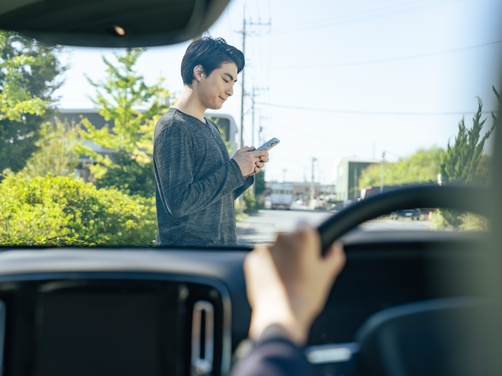
If you hit a pedestrian in California, you’re legally required to stop, help the injured person, exchange information, and report the collision. What happens next depends on who had the right of way, whether either person was careless, how badly the pedestrian was hurt, and whether any laws were broken. An accident can lead to an insurance claim or civil lawsuit, and, in some situations, criminal charges.
For pedestrians and their families, these crashes often bring serious injuries, mounting bills, and uncertainty about what comes next. At Miller Wilmers APC, we represent injured pedestrians in Santa Clarita and throughout the surrounding area, and we’re here to help them pursue the compensation they need to rebuild.
Contact Miller Wilmers APC at (661) 310-1357 for a free consultation.
California law places clear duties on any driver involved in a collision that injures someone. After a crash:
If you were injured as a pedestrian, call Miller Wilmers APC at (661) 310-1357 for a free consultation about your rights and potential claim.
No. California doesn’t automatically place all fault on the driver. Fault depends on how each person behaved and which rules applied at the moment of the crash. Drivers must always use reasonable care, but pedestrians have responsibilities too.
Under California Vehicle Code § 21950, drivers must yield the right-of-way to pedestrians crossing within a marked crosswalk or within an unmarked crosswalk at an intersection. An unmarked crosswalk generally exists where sidewalks meet at an intersection, even without painted lines.
Pedestrians still can’t suddenly step into the path of a vehicle that’s too close to stop, and drivers must slow down and take care around crosswalks.
A pedestrian crossing outside a marked crosswalk or an unmarked crosswalk at an intersection generally must yield to vehicles close enough to pose an immediate hazard. Drivers still must exercise due care for the pedestrian’s safety.
California’s Freedom to Walk Act, which took effect in 2023, limits when officers may stop pedestrians for certain crossing violations. For crossing outside a crosswalk, an officer generally may not make a stop unless a reasonably careful person would recognize an immediate danger of a collision.
California follows pure comparative negligence. If both the driver and the pedestrian share responsibility, the pedestrian’s recovery is reduced by their percentage of fault.
For example, if a pedestrian’s damages total $100,000 and a jury finds the pedestrian 20% at fault, the pedestrian could recover $80,000. A pedestrian can still recover even if they were mostly at fault.
An accidental collision does not automatically lead to criminal charges. Whether charges are possible depends on the driver’s conduct and the circumstances of the collision. Stopping and providing help are required, but doing so does not prevent charges based on how the driver caused the crash.
Conduct such as impaired driving, reckless driving, or a traffic violation that causes a fatal collision may support criminal charges, depending on the facts. Vehicular manslaughter can involve ordinary or gross negligence, depending on the charge.
Leaving the scene of a collision that injures someone is a crime under California Vehicle Code § 20001. Hit-and-run accidents involving injuries can be charged as a misdemeanor or felony, with possible jail or prison time and fines, and penalties increase when the collision causes death or permanent, serious injury.
An injured pedestrian may pursue compensation for:
These damages can add up quickly, especially when the injuries require surgery or long-term care.
An injured pedestrian may seek compensation through the at-fault driver’s bodily injury liability coverage, subject to the policy’s terms and limits.
California’s minimum liability limits for standard auto insurance policies are $30,000 for injury or death to one person, $60,000 for injury or death to multiple people in one accident, and $15,000 for property damage. Those minimums may not cover serious injuries, which is why identifying every available policy matters.
If the claim exceeds the driver’s coverage, the driver may be personally responsible for the difference.
If the driver has no insurance or too little, an injured pedestrian may be able to turn to their own uninsured or underinsured motorist coverage, or to a policy held by a household family member, even though they weren’t in a car at the time.
Unsure what insurance may cover your injuries? Contact Miller Wilmers APC at (661) 310-1357 for a free consultation.
Severe pedestrian injuries can include traumatic brain injuries, spinal cord damage, and multiple fractures, and they can change a person’s life permanently. These catastrophic injury cases often require careful planning for lifelong medical care and lost earning capacity.
If a pedestrian passes away after an accident, certain family members may bring a wrongful death claim for losses such as financial support and companionship. California personal injury lawsuits generally must be filed within two years of the injury. Wrongful death lawsuits generally must be filed within two years of the death. Claims against a public entity can require a formal claim within six months.
Investigators and attorneys often review the police report, witness statements, photos and video from nearby businesses or traffic cameras, vehicle damage, and the injured person’s medical records.
They may also examine lighting, crosswalk markings, signal timing, and the driver’s phone records. In serious cases, accident reconstruction experts can help show how the collision happened. Because video footage can be deleted quickly, gathering evidence early is important.
Miller Wilmers APC was built in Santa Clarita, and the injured pedestrians we represent are our neighbors. Clients work directly with their attorney, and our founding partners bring combined experience in defense work and criminal prosecution, giving our team insight into how cases are evaluated and tried.
We push back when insurers try to shift blame or minimize the impact of an injury. If you or a loved one was hit by a car, you don’t have to face this alone.
Contact Miller Wilmers APC at (661) 310-1357 for a free consultation.